



In memory of Van Cliburn
Farewell to the legend
The saddest news about Van Cliburn’s death, which came on February 27, 2013 didn’t arouse any special reaction neither in our Mass Media, nor among our music maestros. In general, the world of musicians didn’t turn upside down. As the phrase goes, it’s a pity, but nothing can be done: 79 years old is a rather respectable age, and the disease is uncured – bones cancer.
As is customary, information channels reminded that it was the most talented pianist, who won in the 1st Tchaikovsky competition in Moscow in 1958. They showed on TV some of his famous photos taken 55 years ago, in which one could see a smiling, charming young man with bushy hair, and even found some short video fragments of his performances, which survived by a miracle. Also they recollected the fact that involuntarily this rather young musician contributed to the lessening of tension between the USSR and the USA. And that was all.
But why so little information? Why?!

Photo from a private archive of the author
Maybe that’s so because there are ony a few people left who listened to Cliburn «live»? And maybe that’s so because many of his recordings with Kirill Kondrashin both on TV and radio were demagnetized, as this outstanding conductor emigrated from the country. God knows!
In the meanwhile, the death of Harvey Lavan "Van" Cliburn, Jr (in our journalists’ transcription – a bit in a buddy-buddy way – Van Cliburn) – is not just a simple death of one of the brightest pianists of the second half of the ХХ-th century. It’s the end of the legend. And even maybe the end of the great phenomenon called original Russian romantic pianism, which originated from the art of one of the grands of the world pianism of the XIX century – Аnton Rubinstein.
From this very point of view Cliburn’s death gives all grounds to remember both about the 1st Tchaikovsky competition, and about its American winner-pianist, who left an indelible imprint in souls of his multiple admirers.
It’s impossible to overestimate the meaning of that unforgettable competition, opened on March 18, 1958, for cultural and political life of the country. Its effect not only on musicians but on all Soviet people without exception can be compared only with the International Festival of Youth and Studentship, held in Moscow a year before.
Thanks to television broadcasting of the final concert of competition winners, and of winners’ concerts both solo and with orchestras, millions of viewers experienced the power of music art and its influence on their souls for the first time. That spring the name of the winner-pianist – American Van Cliburn, as well as the title of one of the compositions he played – the 1st Concerto for piano with orchestra by Tchaikovsky, was on the lips of all, even those who were too far from music.
Of course, many music admirers knew not much about the two winners of the competition – an American pianist Van Cliburn, and a Soviet violinist Valeriy Klimov, neither did they know about details and complications of this competition. And only after some time, and mostly thanks to the book «Van Cliburn» by Sofya Khentova, Soviet people found out the real name of the pianist, and the fact that his teacher in a famous Juilliard school in New-York was a Russian woman Rosina Lhevinne – nee Rosaliya Yakovlevna Bessi – a daughter of a Moscow amateur musician Maria Kats and a rich Danish jeweller and wine-merchant Jacques Bessi.
This book also told that after her graduation from the Moscow Conservatorium, class of a famous Vasiliy Ilyich Safonov, Rosaliya married the fellow student of great Sergey Rakhmaninov and Aleksandr Skryabin – a brilliant pianist Joseph Arkadyevich Levin, who finished the same Safonov’s class of Conservatorium five years earlier than she did. In 1907 the Levins’ family left for Berlin, and in 1919 – moved to New-York, where Joseph Levin began teaching in Juilliard school, and Rosina assisted him. After Levin’s death in 1944 she became a full-right successor of her husband in his piano class.
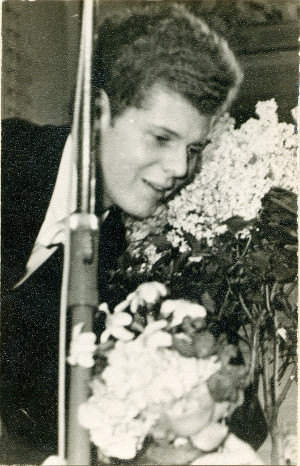
Photo from a private archive of the author
Then, suddenly, in March-April of 1958 all Soviet newspapers and radio started to tell about the first international music competition in the country, and they did it very persistently. Apparenly, having realised the fact that the competition had been a great success (apart from our Soviet participants, 61 performers from 22 countries took part in it), and having estimated its cultural and political importance, the working propaganda attracted people’s attention to this highly important cultural event.
All of a sudden, all articles and programs were riddled with names of well-known members of organising committee and jury board – Dmitry Shostakovich, Dmitry Kabalevsky, Heinrich Neuhaus, Aram Khachaturian, Emil Gilels, Sviatoslav Richter, David Oystrakh, Leonid Kogan, Lev Oborin and Pavel Serebryakov. Even those who were far from the art of music, understood that something out of the ordinary was happening. When it was announced that the winner was not a Soviet pianist Lev Vlasenko, but an American Cliburn, all rushed to TVs, which were not in all homes, and shared rumors about political influence on the results. Those rumors said that Gilels called to Khrushchev to ask if they could give the first prize to Cliburn. And Khrushchev answered: «If he deserved it - yes!»
For all doubts to dissapear you should see and hear Cliburn only once. This 23-year-old pianist had a magic gift to fascinate and hypnotize the audience with his art. His power was unbelievable; one could feel it even through the TV screen. He was very tall and slim, with a red bush of hair and a disarming smile. Without any posing Cliburn sat at the piano, put his big and extraordinary long fingers on the keyboard, and, suddenly, the music started pouring into the concert hall, the music which was freed from the mould of time and sticky traces of later renditions. His hands made the piano sing, as Rubinstein demanded once, and this was exactly what differed Russian piano school from others. So, it’s easy to imagine what happened with the audience in the hall and those who were listening to Cliburn in front of their TV sets!
The competition finished on the 14th of April, but on the next day «Pravda» newspaper published an article of the jury chairman Emil Gilels, in which he wrote: «Van Cliburn... showed himself a complete artist, a musician of a unique gift and unlimited abilities». Heinrich Neuhaus accompanied his former pupil by saying: «V. Cliburn, a young American pianist, who won the first prize, is an absolute genius». Svyatoslav Richter also named Cliburn a genious and brilliant pianist.
Cliburn’s phenomenon is one of the brightest in the rich history of the piano art of the second half of the XХ-th century – and still it can’t leave some modern theorists in peace. It’s known that piano career of Van Cliburn after the fantastic victory in 1958 was not so successful. At first, came the enthusiastic reception of American public and an absolute rise and popularity. After that followed multiple tours, including (and not once) Moscow and Leningrad as well. Then, after burying his father, Van Cliburn stopped touring, started his own business and founded an American competition after his name. And as a matter of fact- that is all. So, does it really mean that Neuhaus and Gilels were wrong in giving so high appraisal to this gifted but only beginning artist?
Yes and no. They were mistaken, but only in their forecast. The diagnosis was surely correct! They judged on what they actually saw and heard. In front of them, there appeared a so-called product of unique qualities combination: natural talent of the young musician with extraordinarily wise and somewhat genious teacher. Rosina Lhevinne knew Rakhmaninov-pianist very well, during long time she assisted her husband Joseph Levin, who in his turn was a co-worker of Rakhmaninov and a pupil of Safonov. The latter was her teacher too. It turned out that in the USA of 50-es she appeared to be the only direct heiress of Great Russian piano school traditions and that approach to music and piano, which defined her and Harvey Lavan Cliburn’s success. He came to Lhevinne’s class when he was 17. «The Little Van», as he was called for fun, managed to take all the best from his teacher during six years of study. He also took from her a genuine love for Russian music and a rare ability to perform it. These qualities helped him in Moscow competition and led him to the victory. It also led to the fact that millions of our listeners understood that Cliburn was a miracle! Even young inexperienced musicians, pupils of thousands of musical schools and studios, students of high schools and conservatoriums forever remembered how Cliburn played the First piano concerto by Tchaikovsky and the Third concerto by Rakhmaninov, Bach’s fuga in H-flat minor and Mozart’s sonata in C major, «Variations of original theme» by Tchaikovsky and Chopin’s «Fantasia», List’s etude «Маzeppa» and his Twelfth rhapsody. Not mentioning the adoptation of Solowyev-Sedoy’s «Podmoskovnye vechera», fantastic in its harmony richness and piano texture. No wonder that the number of people who wanted to learn to play the piano grew up dramatically in that year – it was thanks to Cliburn too. During 55 years from that Moscow competition, little changed in the world of piano art. But the most significant achievment of those years was «music cosmopolitism» of the world musical process. The USSR collapse contributed to it too. Оpened borders gave opportunity to thousands of talented Soviet performers and teachers to move and settle in Israel, in the USA and in many European countries; and thanks to this, to bring to the teaching process principles of Russian piano school, thoroughly checked and verified methods of primary teaching, pedantic devotion to the author’s text, and maybe the most important – open emotionality. Today it’s hard to distinguish French pianists from their German, Italian, Russian and American colleagues. Besides, after graduation young talents can enter foreign higher educational establishments, which attract new students with the star-names in professor-and-teaching staff. One can’t but mention the modern tendency of master-classes, regular visits to which has turned now into an obligatory duty of every young musician.
Time will show whether this national levelling of music performance is good or bad. At the moment – God bless technical progress! We should only remember our great predecessors, and among them Van Cliburn, who gave the audience his incredible sincerity and warmth, high simplicity of renditions and pure naivete, which were the basic components of the musician’s talent.
As is customary, information channels reminded that it was the most talented pianist, who won in the 1st Tchaikovsky competition in Moscow in 1958. They showed on TV some of his famous photos taken 55 years ago, in which one could see a smiling, charming young man with bushy hair, and even found some short video fragments of his performances, which survived by a miracle. Also they recollected the fact that involuntarily this rather young musician contributed to the lessening of tension between the USSR and the USA. And that was all.
But why so little information? Why?!
In the meanwhile, the death of Harvey Lavan "Van" Cliburn, Jr (in our journalists’ transcription – a bit in a buddy-buddy way – Van Cliburn) – is not just a simple death of one of the brightest pianists of the second half of the ХХ-th century. It’s the end of the legend. And even maybe the end of the great phenomenon called original Russian romantic pianism, which originated from the art of one of the grands of the world pianism of the XIX century – Аnton Rubinstein.
From this very point of view Cliburn’s death gives all grounds to remember both about the 1st Tchaikovsky competition, and about its American winner-pianist, who left an indelible imprint in souls of his multiple admirers.
It’s impossible to overestimate the meaning of that unforgettable competition, opened on March 18, 1958, for cultural and political life of the country. Its effect not only on musicians but on all Soviet people without exception can be compared only with the International Festival of Youth and Studentship, held in Moscow a year before.
Thanks to television broadcasting of the final concert of competition winners, and of winners’ concerts both solo and with orchestras, millions of viewers experienced the power of music art and its influence on their souls for the first time. That spring the name of the winner-pianist – American Van Cliburn, as well as the title of one of the compositions he played – the 1st Concerto for piano with orchestra by Tchaikovsky, was on the lips of all, even those who were too far from music.
Of course, many music admirers knew not much about the two winners of the competition – an American pianist Van Cliburn, and a Soviet violinist Valeriy Klimov, neither did they know about details and complications of this competition. And only after some time, and mostly thanks to the book «Van Cliburn» by Sofya Khentova, Soviet people found out the real name of the pianist, and the fact that his teacher in a famous Juilliard school in New-York was a Russian woman Rosina Lhevinne – nee Rosaliya Yakovlevna Bessi – a daughter of a Moscow amateur musician Maria Kats and a rich Danish jeweller and wine-merchant Jacques Bessi.
This book also told that after her graduation from the Moscow Conservatorium, class of a famous Vasiliy Ilyich Safonov, Rosaliya married the fellow student of great Sergey Rakhmaninov and Aleksandr Skryabin – a brilliant pianist Joseph Arkadyevich Levin, who finished the same Safonov’s class of Conservatorium five years earlier than she did. In 1907 the Levins’ family left for Berlin, and in 1919 – moved to New-York, where Joseph Levin began teaching in Juilliard school, and Rosina assisted him. After Levin’s death in 1944 she became a full-right successor of her husband in his piano class.
All of a sudden, all articles and programs were riddled with names of well-known members of organising committee and jury board – Dmitry Shostakovich, Dmitry Kabalevsky, Heinrich Neuhaus, Aram Khachaturian, Emil Gilels, Sviatoslav Richter, David Oystrakh, Leonid Kogan, Lev Oborin and Pavel Serebryakov. Even those who were far from the art of music, understood that something out of the ordinary was happening. When it was announced that the winner was not a Soviet pianist Lev Vlasenko, but an American Cliburn, all rushed to TVs, which were not in all homes, and shared rumors about political influence on the results. Those rumors said that Gilels called to Khrushchev to ask if they could give the first prize to Cliburn. And Khrushchev answered: «If he deserved it - yes!»
For all doubts to dissapear you should see and hear Cliburn only once. This 23-year-old pianist had a magic gift to fascinate and hypnotize the audience with his art. His power was unbelievable; one could feel it even through the TV screen. He was very tall and slim, with a red bush of hair and a disarming smile. Without any posing Cliburn sat at the piano, put his big and extraordinary long fingers on the keyboard, and, suddenly, the music started pouring into the concert hall, the music which was freed from the mould of time and sticky traces of later renditions. His hands made the piano sing, as Rubinstein demanded once, and this was exactly what differed Russian piano school from others. So, it’s easy to imagine what happened with the audience in the hall and those who were listening to Cliburn in front of their TV sets!
The competition finished on the 14th of April, but on the next day «Pravda» newspaper published an article of the jury chairman Emil Gilels, in which he wrote: «Van Cliburn... showed himself a complete artist, a musician of a unique gift and unlimited abilities». Heinrich Neuhaus accompanied his former pupil by saying: «V. Cliburn, a young American pianist, who won the first prize, is an absolute genius». Svyatoslav Richter also named Cliburn a genious and brilliant pianist.
Cliburn’s phenomenon is one of the brightest in the rich history of the piano art of the second half of the XХ-th century – and still it can’t leave some modern theorists in peace. It’s known that piano career of Van Cliburn after the fantastic victory in 1958 was not so successful. At first, came the enthusiastic reception of American public and an absolute rise and popularity. After that followed multiple tours, including (and not once) Moscow and Leningrad as well. Then, after burying his father, Van Cliburn stopped touring, started his own business and founded an American competition after his name. And as a matter of fact- that is all. So, does it really mean that Neuhaus and Gilels were wrong in giving so high appraisal to this gifted but only beginning artist?
Yes and no. They were mistaken, but only in their forecast. The diagnosis was surely correct! They judged on what they actually saw and heard. In front of them, there appeared a so-called product of unique qualities combination: natural talent of the young musician with extraordinarily wise and somewhat genious teacher. Rosina Lhevinne knew Rakhmaninov-pianist very well, during long time she assisted her husband Joseph Levin, who in his turn was a co-worker of Rakhmaninov and a pupil of Safonov. The latter was her teacher too. It turned out that in the USA of 50-es she appeared to be the only direct heiress of Great Russian piano school traditions and that approach to music and piano, which defined her and Harvey Lavan Cliburn’s success. He came to Lhevinne’s class when he was 17. «The Little Van», as he was called for fun, managed to take all the best from his teacher during six years of study. He also took from her a genuine love for Russian music and a rare ability to perform it. These qualities helped him in Moscow competition and led him to the victory. It also led to the fact that millions of our listeners understood that Cliburn was a miracle! Even young inexperienced musicians, pupils of thousands of musical schools and studios, students of high schools and conservatoriums forever remembered how Cliburn played the First piano concerto by Tchaikovsky and the Third concerto by Rakhmaninov, Bach’s fuga in H-flat minor and Mozart’s sonata in C major, «Variations of original theme» by Tchaikovsky and Chopin’s «Fantasia», List’s etude «Маzeppa» and his Twelfth rhapsody. Not mentioning the adoptation of Solowyev-Sedoy’s «Podmoskovnye vechera», fantastic in its harmony richness and piano texture. No wonder that the number of people who wanted to learn to play the piano grew up dramatically in that year – it was thanks to Cliburn too. During 55 years from that Moscow competition, little changed in the world of piano art. But the most significant achievment of those years was «music cosmopolitism» of the world musical process. The USSR collapse contributed to it too. Оpened borders gave opportunity to thousands of talented Soviet performers and teachers to move and settle in Israel, in the USA and in many European countries; and thanks to this, to bring to the teaching process principles of Russian piano school, thoroughly checked and verified methods of primary teaching, pedantic devotion to the author’s text, and maybe the most important – open emotionality. Today it’s hard to distinguish French pianists from their German, Italian, Russian and American colleagues. Besides, after graduation young talents can enter foreign higher educational establishments, which attract new students with the star-names in professor-and-teaching staff. One can’t but mention the modern tendency of master-classes, regular visits to which has turned now into an obligatory duty of every young musician.
Time will show whether this national levelling of music performance is good or bad. At the moment – God bless technical progress! We should only remember our great predecessors, and among them Van Cliburn, who gave the audience his incredible sincerity and warmth, high simplicity of renditions and pure naivete, which were the basic components of the musician’s talent.